When you buy through links on our articles, Future and its syndication partners may earn a commission.

The sun will appear larger in the sky than on any other day in 2026 on Jan. 3, as our planet reaches its closest point to our parent star in its 365-day orbit during an event known to astronomers as perihelion.
Earth orbits the sun at an average distance of 93 million miles (150 million kilometers), a distance known as 1 astronomical unit. However, our planet's path around its star isn't a perfect circle, but rather takes the form of an ellipse, or oval, which sees Earth's distance from the sun vary by approximately 3% as it progresses through its yearly orbit.
The moment of perihelion — our closest approach to the sun in 2026 — will occur at 12:15 p.m. EST (1715 GMT) on Jan. 3, when our Blue Marble will pass 91,498,806 miles 147,253,054 km) from our parent star.
Around this time, the sun would loom fractionally larger when viewed through a telescope fitted with a quality solar filter compared to how it would look at its most distant point from the sun known as aphelion, when we are separated by a further 3.1 million miles (5 million km).
However, this difference is very slight, with the sun having an angular size of 32 arcminutes and 31 arcseconds at perihelion compared to 31 arcminutes and 27 arcseconds at aphelion, according to In-The-Sky. The slight decrease in our distance to the sun also has no appreciable effect on Earth's temperature or the passage of the seasons, which is driven by the 23.4 degree tilt in Earth's rotational axis relative to our orbit around the sun.
Remember, it's never safe to look at the sun with the naked eye or through an ordinary telescope, pair of binoculars, or any other optical equipment as doing so can lead to an instant and permanent loss of vision.
Editor's Note: If you have the specialized equipment needed to safely capture an image of the sun during perihelion and would like to share your astrophotography with Space.com's readers, then please send your photo(s), comments, and your name and location to [email protected].
LATEST POSTS
- 1
 VPN Administrations for Online Protection
 - 2NASA’s Pandora telescope will study stars in detail to learn about the exoplanets orbiting them
- 3Famous Places to get-away for Americans
- 4Looking for under-the-radar adventures? Try Norway's Vesterålen
- 5Italy now recognizes the crime of femicide and punishes it with life in prison




- How to track NASA’s Artemis II and Orion’s journey to the moon
- McDonald's is bringing two 'KPop Demon Hunters' meals to McDonald's. Here's what they include and when they launch.
- There’s ‘super flu,’ COVID, RSV. Is it going around in SoCal?
- Iran's stolen futures: The arrested Iranians at risk of execution by the regime
- One perk to marrying Richard Marx later in life? 'We don't have time' for stupid arguments, says Daisy Fuentes.
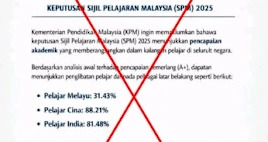
- Fabricated statement about Malaysian national exam top scorers stokes racial sentiment
- Palestinians tell BBC they were sexually abused in Israeli prisons
- Viable Correspondence: Building Solid Connections
- Bruno Mars tour 2026: How to get tickets for 'The Romantic Tour,' presale times, prices and more